
Introduction
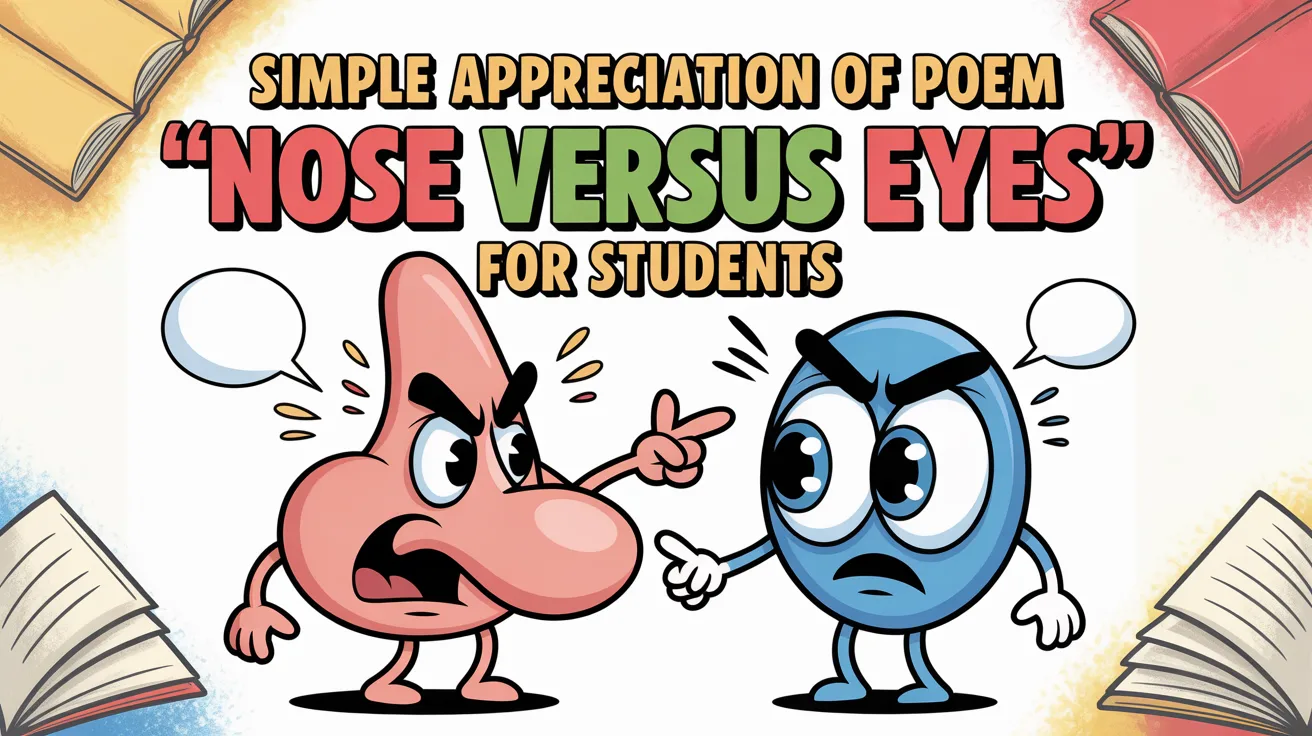
The poem “Nose versus Eyes” is a short but meaningful humorous poem written by William Cowper, a famous English poet. Though the poem is small in length, it carries a deep moral lesson about pride, ego, and foolish arguments. The poem presents a funny quarrel between two parts of the human body—the nose and the eyes. Both believe that they are more important and deserve a better position on the face. Through this simple argument, the poet reflects human behavior, where people often fight over status and importance. William Cowper uses personification to give human qualities to the nose and the eyes, making the poem lively and interesting. The language of the poem is very simple, clear, and easy to understand, which makes it perfect for students. The poem entertains the reader while also teaching an important lesson about humility, cooperation, and good judgment.
Appreciation of the Poem “Nose versus Eyes” in Point Format
- Title: The title “Nose versus Eyes” clearly suggests a conflict between two body parts.
- Poet: The poem is written by William Cowper.
- Theme / Central Idea: The poem shows the foolishness of pride and unnecessary arguments.
- Tone / Mood: The tone of the poem is humorous and light-hearted.
- Form and Style and Rhyme Scheme: The poem is written in narrative form with a regular rhyme scheme.
- Language: The language is simple, clear, and suitable for students.
- Figures of Speech: Personification is used as the nose and eyes act like human beings.
- Message / Moral: The poem teaches that pride leads to trouble and poor decisions.
- Personal Opinion: I find the poem very funny as well as meaningful.
- Conclusion: Overall, the poem teaches a strong moral lesson in an entertaining way.
Appreciation of the Poem “Nose versus Eyes” in Paragraph Format
The poem “Nose versus Eyes” is a humorous narrative poem written by William Cowper. Firstly, the poem presents a funny quarrel between the nose and the eyes, where both argue about their importance and position on the face. The central idea of the poem is to show how pride and ego lead to meaningless conflicts. The tone of the poem is light, humorous, and playful, which makes it enjoyable to read.
The poem is written in a simple narrative style with a smooth and regular rhyme scheme that adds rhythm to the poem. The language used is very easy and student-friendly. The poet uses personification by giving human qualities to the nose and the eyes, allowing them to speak and argue like people. Through this argument, the poet highlights how foolish decisions are made when pride controls judgment. In my opinion, the poem is interesting because it teaches an important lesson without being serious or boring. Overall, the poem is entertaining, simple, and educational, making it suitable for students.
Also Read: Simple Appreciation and Summary Of Poem “Upon Westminster Bridge”
Detailed Appreciation of the Poem “Nose versus Eyes”
The poem “Nose versus Eyes” is written by William Cowper, who is known for using simple ideas to convey strong moral lessons. This poem may look funny on the surface, but it reflects deep truths about human behavior. The poet uses a small quarrel between two body parts to show how people often argue over importance and position. The poem is short, yet it leaves a strong impression on the reader.
The poem begins with a quarrel between the nose and the eyes. Both argue about their position on the human face. The eyes believe that they deserve a higher position because they help a person see the world. They feel proud of their role and think they are more important. On the other hand, the nose argues that it is essential for breathing and smelling. The nose also believes it deserves respect and a better position. This argument represents human pride and ego, where everyone wants to feel superior.
As the argument continues, the nose and eyes decide to take the matter to a judge. This part of the poem adds humor and shows how humans depend on authority to settle disputes. Unfortunately, the judge makes a foolish decision. He orders that the nose should be placed above the eyes. This judgment creates discomfort and confusion. The situation becomes funny, but it also shows the danger of poor judgment.
Through this incident, the poet highlights how wrong decisions can create problems instead of solving them. The judge fails to understand the natural order and importance of balance. The poet uses this moment to show that not all decisions made by authority are correct. Wisdom and understanding are more important than power or position.
Personification is the main figure of speech used in the poem. The poet gives human qualities to the nose and the eyes by making them speak, argue, and feel proud. This makes the poem lively and interesting. The rhyme scheme is regular, which gives the poem a musical quality. The language is very simple, making it easy for students to understand the message.
The tone of the poem remains humorous throughout, but the message is serious. The poet wants readers to understand that pride and ego lead to unnecessary conflicts. The poem teaches that every role is important and that balance is necessary. Just like the body works well when all parts stay in their proper place, society works well when people respect each other.
In my opinion, this poem is very suitable for students because it teaches a moral lesson in a fun way. It encourages students to think about humility, cooperation, and respect. The poem also warns against blind judgment and pride. Overall, “Nose versus Eyes” is a simple, humorous, and meaningful poem that leaves a lasting lesson for readers.
Learn to make Website: Webzoo47.com
Mass comment blasting: $10 for 100k comments. All from unique blog domains, zero duplicates. I will provide a full report and guarantee Ahrefs picks them up. Email mailto:helloboy1979@gmail.com for payment info.If you received this, you know Ive got the skills.
wish you best and best